Research Seminar addresses the Lasallian Commitment to integral ecology: “All is connected”
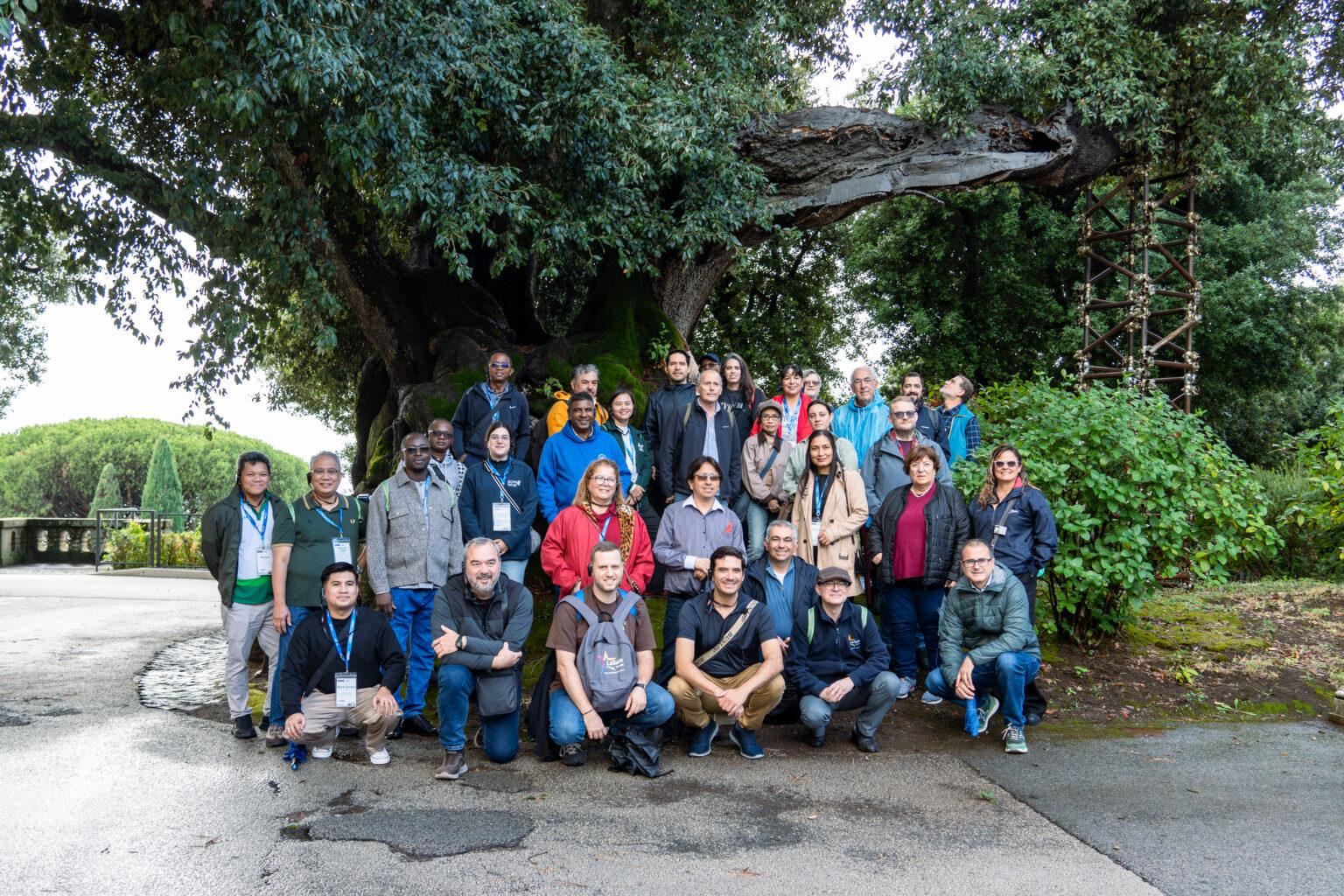
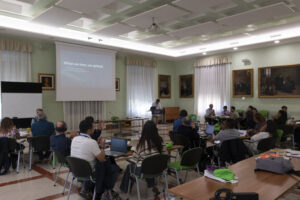
With the participation of nearly 40 Lasallians from various regions of the world, the 2026 Lasallian Research Seminar, held at the Generalate in Rome from 19 to 23 October, addressed the Lasallian commitment to integral ecology: “All is connected”.
Meeting and exchange
“The sessions of the Seminar, organised by the Office of Heritage and Research, are intended to provide an opportunity for those within the Lasallian world who are engaged in some form of research to meet others who are more involved in specific works,” explained Brother Santiago Rodríguez Mancini. “Each year we endeavour to focus on one of the ‘Pathways of Transformation’ proposed by the latest General Chapter, and this year, specifically, it is that of integral ecology.”
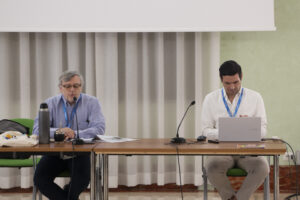 In this way, the programme has fostered the exchange of knowledge – the fruit of research – and of experiences, in an atmosphere of Lasallian spirituality and fraternity. “Undoubtedly, the best practices we have shared have helped us gain a clearer insight into what we do in our daily lives, what we ought to do, and the planning required to achieve best practices, successful projects and effective approaches to caring for our Common Home.,” commented Brother Henry Camizán, from the Bolivia-Peru District.
In light of the necessity of integral ecology, the Research Seminar explored where we stand—as individuals, educational institutions and Districts—in our day-to-day actions. To this end, Brother Carlos Gómez Restrepo, Vicar General of the Institute, offered some reflections on integral ecology and environmental education as “a Pathway of Transformation for the Institute”, whilst several experts spoke on the biblical, theological, scientific and catechetical foundations of an ecological and social vision, from a Christian perspective of universal fraternity and inspired by Pope Francis’s encyclical Laudato si’.
Best practices
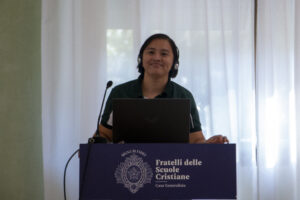 Similarly, Seminar participants have shared best practices in environmental advocacy in response to the cry of the Earth and of the poor, such as the La Salle Botanical Gardens project developed by De La Salle Philippines; as well as the integrated aquaculture initiative in Burkina Faso, run by the Lasallian District of West Africa (DILAO), which aims to ensure sustainable food security; and the Palestinian Institute for Biodiversity and Sustainability, affiliated with the University of Bethlehem, in the Holy Land, which promotes biodiversity, care for creation and hope.
University campuses in Spain also shared their development and sustainability plans through specific projects such as the ‘campus for all’ initiative at the Madrid campus, which represents an educational commitment that integrates teaching, research and social engagement, and the ‘unique project’ at the Barcelona campus, which fosters the exchange of interdisciplinary knowledge with partner universities to address the needs of vulnerable communities and promote social justice.
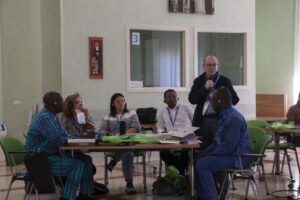 Added to these are other significant initiatives, such as the Laudato si’ Plan and the Laudato si’ Team of the Arlep District (La Salle in Spain and Portugal), which has facilitated the implementation of processes of integral ecological conversion in communities and schools, and the Lasallian Institute for the Environment (LIFE)’s approach to environmental communication and the involvement of young people in decision-making to advocate for the defence of our ‘common home’.
Borgo Laudato Si’
During one of its sessions, the Lasallian Research Seminar also provided a pedagogical introduction to Borgo Laudato Si’ in Castel Gandolfo, “an initiative launched by Pope Francis which has taken shape and continued to develop thanks to the support and blessing of Pope Leo, who decided to carry on this legacy of transforming this papal summer residence – with its four centuries of history – into a place open to the public for visits, but which is also driving forward projects in social justice, solidarity and integral ecology across many diverse fields and areas, such as scientific development, and training for refugees, migrants and people in vulnerable situations”, as Brother David García, the Institute’s Organisational Coordinator, explained.
“Borgo Laudato Si’ aims to embody the experience that a different world, a different way of living, is possible, and we have come to learn from this experience in order to find local ways to replicate it.,” adds Brother David.
Towards the end of the seminar, a number of topics related to ecological spirituality were discussed, with a view to fostering sustainable lifestyles, as well as the Lasallian roots of environmental education and ecological spirituality.
Prophetic beacons of ecological conversion
 “To be a Lasallian educator today is to read the signs of the times with the eyes of faith, to recognize the existential climate emergency, and to respond with unyielding courage. We must ensure that our educational works are not complicit in the silence or inaction of the powerful, but stand as prophetic beacons of truth, advocacy, and ecological conversion”, highlighted Brother Armin Luistro, Superior General of the Institute, as he brought the Seminar to a close.
“Let us return to our institutions determined to transform them into living models of sustainability and justice. Let us educate a new generation of young people who not only know how to read the world, but who possess the moral conscience and spiritual courage to heal it” concluded the Brother Superior General.