

On 13 December, 50 French martyrs from the Second World War will be beatified in Notre-Dame Cathedral in Paris. They are a group of priests, religious, seminarians and lay people who were killed out of hatred for the faith between 1944 and 1945 by a Nazi regime that, at that time, saw its final defeat approaching.
Among this group of martyrs are two former students of the Lasallian Collège de Les Francs Bourgeois in Paris. They are Robert Beauvais, aged 22, who had completed all his schooling with the Brothers, and Joseph Paraire, a brilliant student and Franciscan Brother aged 25 at the time of his martyrdom. Both were martyred in Germany, where they had been mobilised for forced labour.
Resistance to injustice
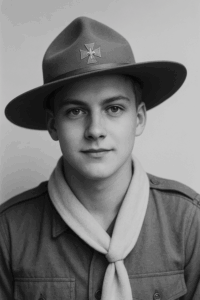 Robert Beauvais, born in Paris in 1922, showed a strong faith from his youth, which was especially evident in the Scout movement, which he joined at the age of 14. The war, which reached France when Robert was already a mature young man, forced him to live in very difficult situations, in which he demonstrated consistency in his life and strength of conviction.
Sent to Germany in early 1943 for forced labour, he was assigned to the Berlin-Tempelhof railway station. There he joined the emerging Catholic Action, where he contributed all his experience in Scouting.
Despite the growing danger posed by Nazi persecution, Robert always displayed his faith and commitment as a believer. It was precisely his intense scouting activity that made the police take notice of him, so that in August 1944, he was arrested by the police, accused of handing over some photographs to groups opposed to the Nazi regime. During interrogation, Robert confessed to being affiliated with Catholic Scout Movement, which, according to him, was a movement of resistance to injustice.
In retaliation, he was sent first to the Oranienburg-Sachsenhausen concentration camp and then to Neuengamme-Hamburg, where he died on 10 January 1945 as a result of poor living conditions.
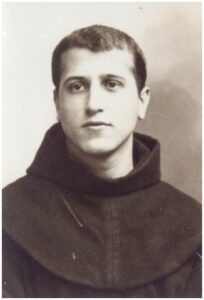 Joseph Paraire was born in Vicennes in 1919. Following in the footsteps of his father, also a former student of the Parisian Collège des Francs Bourgeois, Joseph studied at the same school run by the Brothers of the Christian Schools, where he excelled as a student. In fact, he received several school awards and in 1935 was elected president of the Académie des Francs Bourgeois by his classmates.
After completing his studies with the Brothers, he began to study law. However, in 1938 he entered the Franciscan house of formation, where he soon would become Brother Louis and professed for the first time as a Franciscan Brother in 1942.
In September 1943, he was conscripted for forced labour in Germany and sent to the Reichsbahn in Cologne. There were twelve Franciscan students there, among whom the future martyr was nicknamed “Good Louis” for his spirit of community, always concerned that the group be united by cordial bonds of brotherhood.
These young Franciscans formed a choir called “Les alouettes de France”, famous for enlivening numerous celebrations and funerals. In Cologne, Brother Louis joined one of the many Church cells that provided spiritual assistance throughout Germany: sacraments, spiritual support, consolation…
But at the end of 1943, the activities of the Catholic Church among French workers, suspected of fighting the Nazi regime, were severely prohibited and those involved in them were arrested. Among them was Brother Luis, who was arrested in April 1944, viciously tortured and sent to the Buchenwald concentration camp, where he became prisoner 81758.
A year later, the prisoners of the camp were put on a train, known as the “death train”, which was supposed to take them to the Dachau concentration camp, although in fact the train travelled for three weeks throughout Germany, desperately fleeing the advance of the Soviet army. On that macabre train, Brother Luis showed signs of intense exhaustion and suffered from dysentery, but he did not complain, earning the admiration of all his fellow prisoners. He did not survive the journey and died on 26 April 1945.
Now, after several years of thorough investigation and after hearing numerous eyewitness accounts of the events, the Catholic Church has decided to recognise the deaths of these committed Christians as martyrdom, that is, that they were killed out of hatred for the faith. Consequently, it officially declares them “blessed.” They are, therefore, an example of life for all of us who draw close to them and intercessors before the eternal Father on behalf of all humanity.
We, the De La Salle Brothers join in the joy of the French Church and ask, through the intercession of the two new Lasallian blessed, that God bless all teachers, students and families of Lasallian educational centres. May the Spirit help us to be, at all times, like the two martyrs now glorified, generous apostles, joyful in tribulation and faithful to the Gospel.
* Article written by Brother Josean Villalabeitia, Postulator General of the Institute of the Brothers of the Christian Schools.