
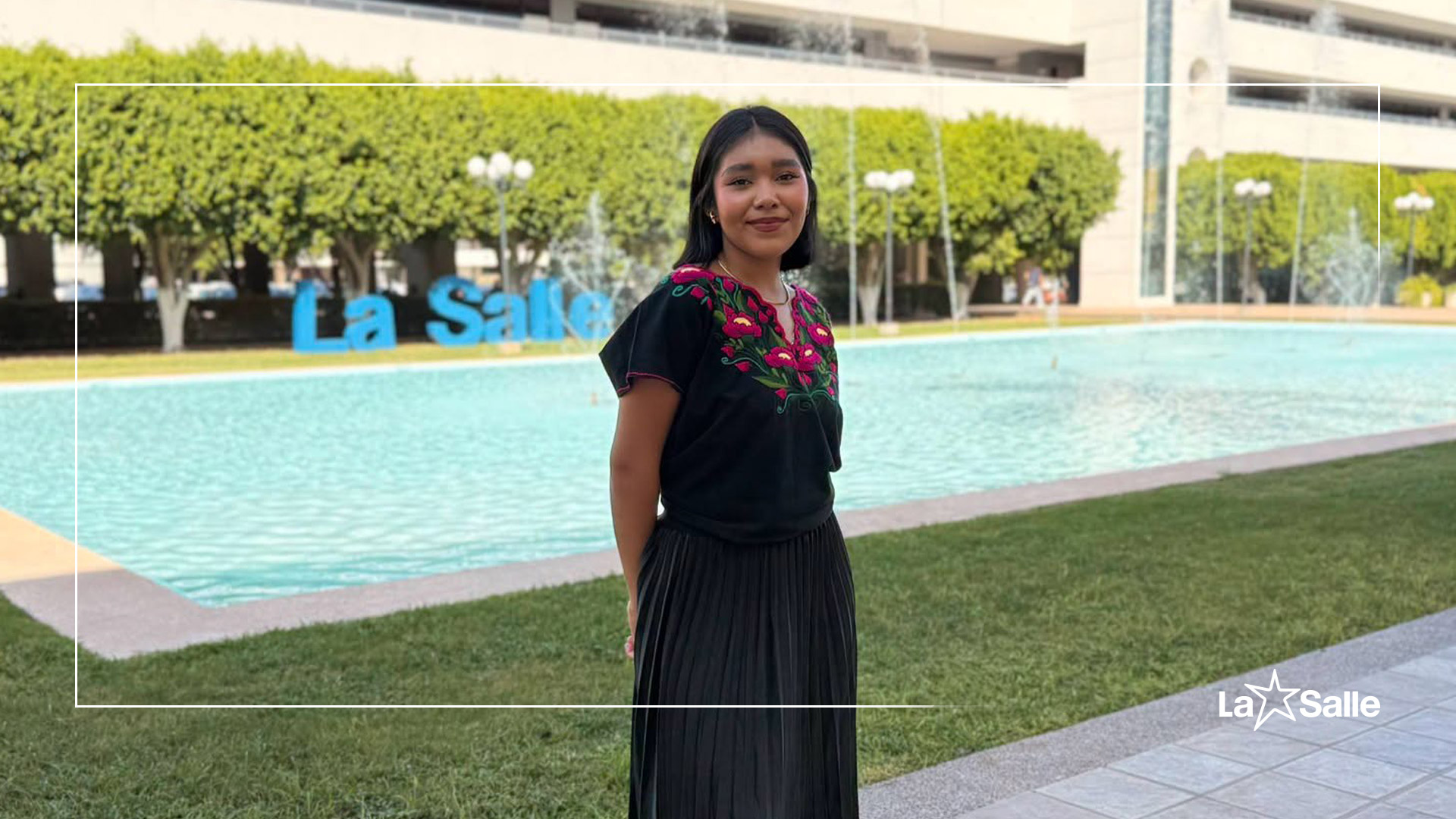


 More than 10,000 young people from 191 countries around the world gathered in Yekaterinburg (Russia) from 11 to 17 September for the 2026 International Festival of Youth. Among them was Fabiola Sánchez Borbón, a member of the Yaqui people – an indigenous community in the state of Sonora, in north-western Mexico – who is currently in her third semester of a law degree at Universidad La Salle Noroeste.
Fabiola was selected, together with two other young Mexicans, to represent her country after submitting a thesis on her leadership journey, in which she discussed what sets her apart as a young person, explaining the mission she feels called to fulfil in life and what she would do to achieve it. It was in this way that she subsequently received an invitation to take part in this multicultural forum.
Since the age of 15, Fabiola has distinguished herself through her involvement in youth political organisations, where she has taken on various roles to advocate for social causes in her community and to highlight the values that form part of her ancestral culture.
Subsequently, as an outstanding student, she has been a beneficiary of the Pro Becas programme, a scheme that has enabled her to pursue her university studies.
Multicultural experience and critical thinking
“Studying at Universidad La Salle Noroeste opened my eyes to other realities and, above all, it has enabled me to develop critical thinking”, says the young Lasallian, who considers her participation in the International Festival of Youth to have been “an immense, multicultural experience”, which has allowed her to “question the reality of other countries, learn about different cultures and each person’s journey, as well as their environment, and for them to learn about mine”. Undoubtedly, an unforgettable experience.
For the Lasallian student, this international experience, alongside many other young leaders from around the world, is also a sign of hope for the new generations of indigenous people, as she maintains that “it sets an example for the girls in her community” in Tajimaroa, a rural Yaqui village situated in the municipality of Cajeme, which has a population of around 359.
On her return to Universidad La Salle Noroeste, after this unprecedented experience in Russia, Fabiola hopes to continue her law studies with the firm intention of continuing to take on leadership roles in the public sphere and in politics, in order to “lead positive change in society” and, more specifically, “to strive for a more equitable and equal society for Yaqui women”.
* Source: Meganoticias.mx. Photo: Universidad La Salle Noroeste.