Lasallian Mission
More than three centuries have passed since Saint John Baptist de La Salle and the first Brothers joined together to conduct gratuitous Christian schools in France. By combining Christian formation and good quality teaching, and doing so in a brotherly manner, they rendered an important and much-needed service to the Church and society (cf. Rule 13).
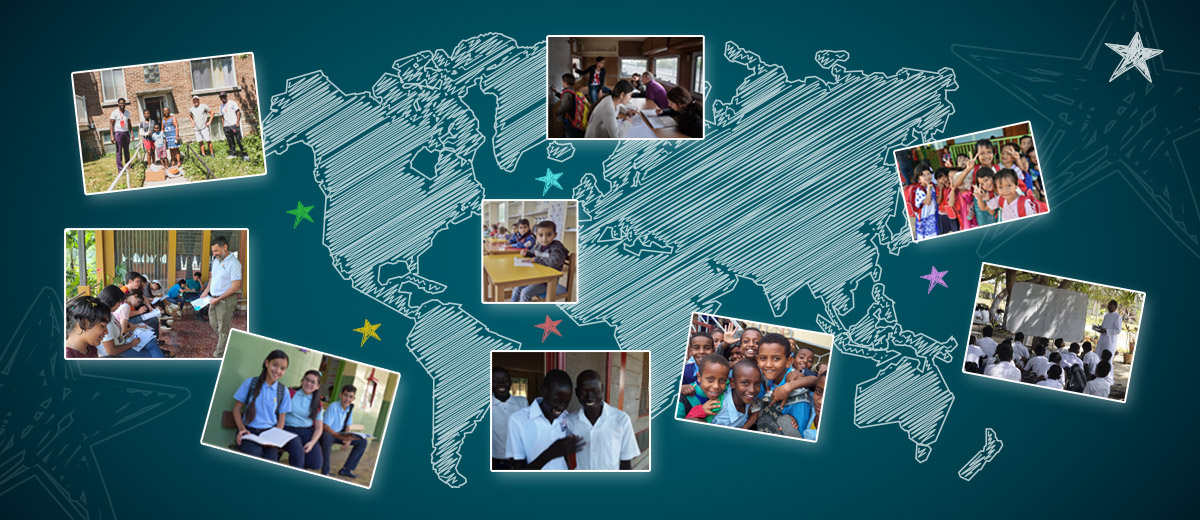
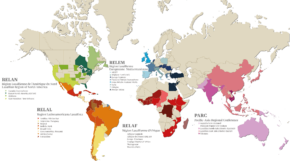 Today, the Lasallian Mission moves on and has spread to 80 countries, where over one million students, including children, young people and adults, benefit from more than 1,100 Lasallian educational works. More than 2,700 Brothers of the Christian Schools and 90,000 lay educators and collaborators keep the Lasallian charism alive and are committed, in a special way, to “the educational needs of those whose dignity and basic rights are not recognised,” for which “the Institute establishes, renews and diversifies its works according to the needs of the Reign of God” (Rule 13).
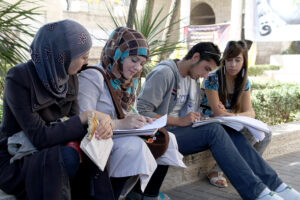 The Lasallian Mission is carried out in multicultural, multi-religious and even secularised contexts, covering early childhood and primary education, secondary and high school education, tertiary and university education, as well as various non-formal education centres and inter-congregational projects linked to the Church’s evangelising mission.
Approximately half of Lasallian students are at risk of socio-educational exclusion, living in contexts of poverty and vulnerability with regard to their fundamental rights. In this sense, the Lasallian Mission involves providing educational opportunities to those who would otherwise not have access to education, promoting the inclusion of the most marginalised social groups, women and girls, and students with special needs, throughout the world, as an expression of its preferential option for educational service to the poor (cf. Rule 29).
 The Institute of the Brothers of the Christian Schools maintains its educational commitment to promoting and defending children’s rights, being one of the founding members of BICE (Bureau International Catholique de l’Enfance). As a result of this commitment to carrying out the educational mission among the poorest, in 1990, the International Year of Literacy, UNESCO awarded Lasallian institutions the NOMA prize.
 Likewise, the Lasallian Mission is expressed in inter-congregational projects such as ‘Solidarity with South Sudan‘ by the Union of Superiors General and the ‘Frateli Project’ together with the Marist Brothers, which seek to respond to the emerging and urgent needs of the most vulnerable and at-risk children and young people.
 Currently, the Lasallian Mission continues to respond to the realities in which it is involved, through its educational centres and through integrated and sustainable programmes so that education becomes a driving force for development, justice and equity for the entire Community.
To make this possible, it relies on the Office of Solidarity and Development and an international network of Lasallian non-profit organisations which, in line with the United Nations Sustainable Development Goals and the Global Compact on Education, carry out projects of solidarity, development cooperation and volunteer in order to build a more fraternal world.
Support us