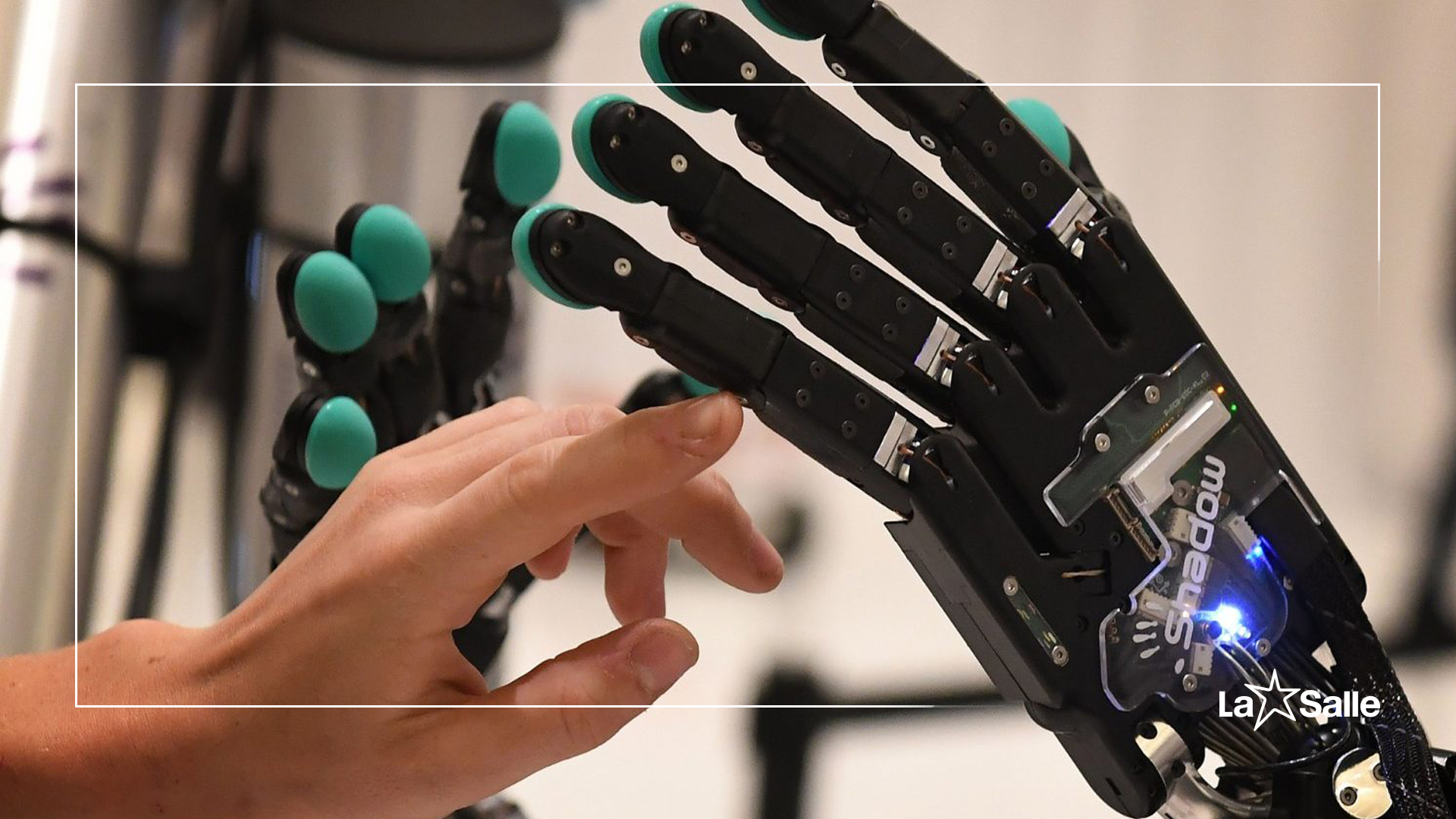


 In a context marked by the rapid advance of artificial intelligence and its growing presence in everyday life, Pope Leo XIV’s message for World Day of Social Communications 2026, which is celebrated on Sunday 17 May, the Solemnity of the Ascension of the Lord, resonates with particular force in the field of education. Under the theme “Preserving human Voices and Faces”, the Pontiff urges us not to lose sight of the centrality of the person in the face of increasingly powerful and omnipresent technology.
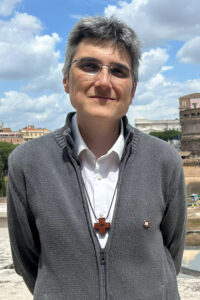
For Brother Jorge Sierra, Director of Pastoral Ministry for La Salle Spain and Portugal, the Pope’s words “very aptly” address an urgent need of our time.
“To safeguard what truly makes us human and not allow ourselves to be swept away by a trend that dehumanises because it places technology so very much at the centre – so visible, yet devoid of soul,” he states in an interview with Vatican Radio – Vatican News.
A Science teacher who has been involved in youth ministry for many years, the religious Brother acknowledges that artificial intelligence is already part of young people’s everyday lives, as they are “digital natives and natives of artificial intelligence alike”.
An anthropological challenge rather than a technological one
In his message, Leo XIV warns that the great challenge of our time is not merely technological, but profoundly anthropological. According to Brother Jorge, this reflection goes to the heart of the matter: avoiding both the indiscriminate rejection of technology and an uncritical acceptance that ends up dehumanising relationships.
“Artificial intelligence can handle repetitive tasks, but accompaniment, close relationships and the proclamation of the Gospel cannot be replaced by any algorithm,” he maintains.
The religious Brother highlights that Christian education must reinforce precisely what technology cannot replicate: human closeness, listening, discernment and the experience of faith lived in community.
“Perhaps we need to focus our efforts more on personal relationships to foster a personal relationship with Jesus. Artificial intelligence will always be a means, never an end,” he adds.
Educating for the critical use of AI
In Lasallian schools, the emergence of artificial intelligence is already transforming educational dynamics. Far from opting for a ban, the Institute seeks to support students and teachers in the critical and responsible use of these tools.
“We know that students use it. It is not a question of banning it, but of educating them to know how to use it,” explains Brother Jorge.
This also involves reviewing traditional teaching methods. Activities that previously assessed the ability to summarise or compile information lose their meaning in a context where AI can perform them automatically. The challenge, he points out, now lies in fostering the understanding, assimilation and creative application of knowledge.
“Schools and society are having to adapt to the change of the times that has caught us somewhat off guard,” he acknowledges.
Hyperconnected young people and the need for discernment
Brother Jorge also observes that many young people use artificial intelligence tools with complete ease, almost without questioning their ethical or cultural implications.
“They have the app installed on their mobile phones and when they don’t know something, they immediately look it up,” he says.
However, he warns that not even adults are yet fully aware of all the associated risks, especially those linked to the manipulation of information, algorithmic biases and the reduction of the person to mere consumer data.
In this context, he considers the role of the Christian educator to be indispensable as a critical mediator capable of offering a perspective centred on the Gospel and on the dignity of the most vulnerable.
“An algorithm created by a large company is probably not capable of providing that perspective on the youngest members of society,” he states.
“We are not an algorithm”
During the interview, the Director of Pastoral Ministry recalled a recent statement by Leo XIV: “We are not an algorithm; we are a desire”.
In his view, the phrase sums up one of the great contemporary challenges: resisting the temptation to reduce human identity to an accumulation of data, preferences and consumption patterns managed by automated systems.
“We are so much more: we are desire, commitment and will, and technology will never be able to surpass that,” he maintains.
Back to real life
In line with the Pope’s thinking, the religious Brother believes it is urgent to help young people reclaim spaces for an authentically human life beyond screens.
“We need to return to real life, to friendship, to meeting others, even to simply spending time with friends,” he says.
Whilst acknowledging the enormous potential of technology, he insists on the need to promote a certain “digital sobriety”, especially in areas such as prayer, the liturgy or the inner life.
“Art, creativity and commitment are wholly human. Artificial intelligence should help us to be more human, not to replace our humanity,” he concludes.
Young people prepare for the meeting with the Pope in Spain
In this same spirit of formation and support, Brother Jorge Sierra also highlighted the preparations being made by the Lasallians alongside groups of young people to take part in the prayer vigil presided over by Pope Leo XIV during his apostolic visit to Spain, scheduled for 6–12 June 2026. From schools, universities and educational institutions across Spain and Portugal, the Lasallian network is organising meetings, moments of prayer and opportunities for reflection to help young people experience this event as an experience of faith and community.
The Director of Pastoral Ministry explained that around 300 young Lasallians will take part in the activities planned in Madrid, whilst other groups will join in Barcelona and the Canary Islands, coinciding with the various stages of the papal visit. In addition to the logistics of reception, accommodation and support, the aim is for the Pope’s visit to be integrated into a broader process of personal growth, vocational discernment and commitment to solidarity. “We hope that this meeting with Pope Leo will be an experience that helps young people to find themselves, discover their place in the world and strengthen their desire to serve,” he remarked.