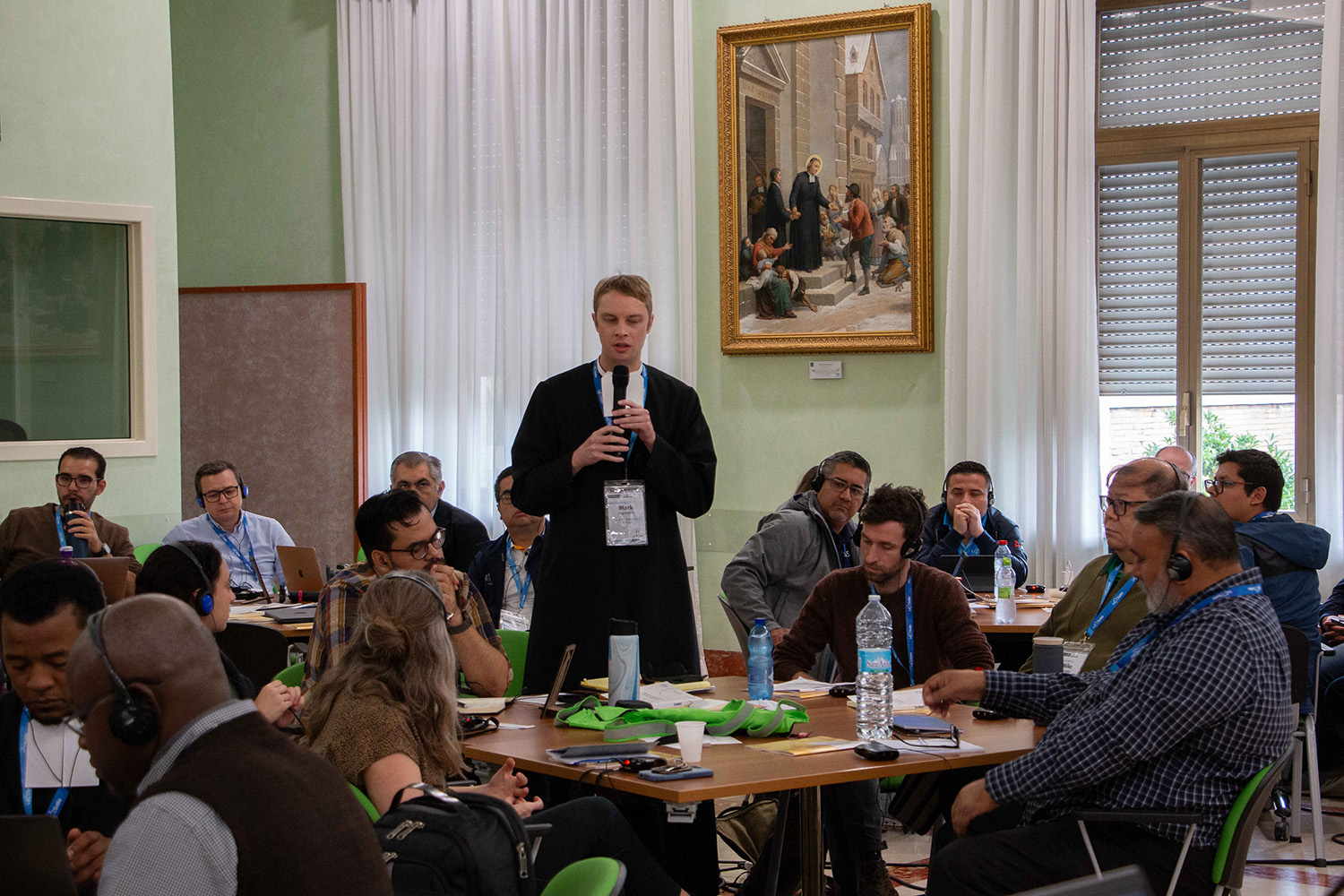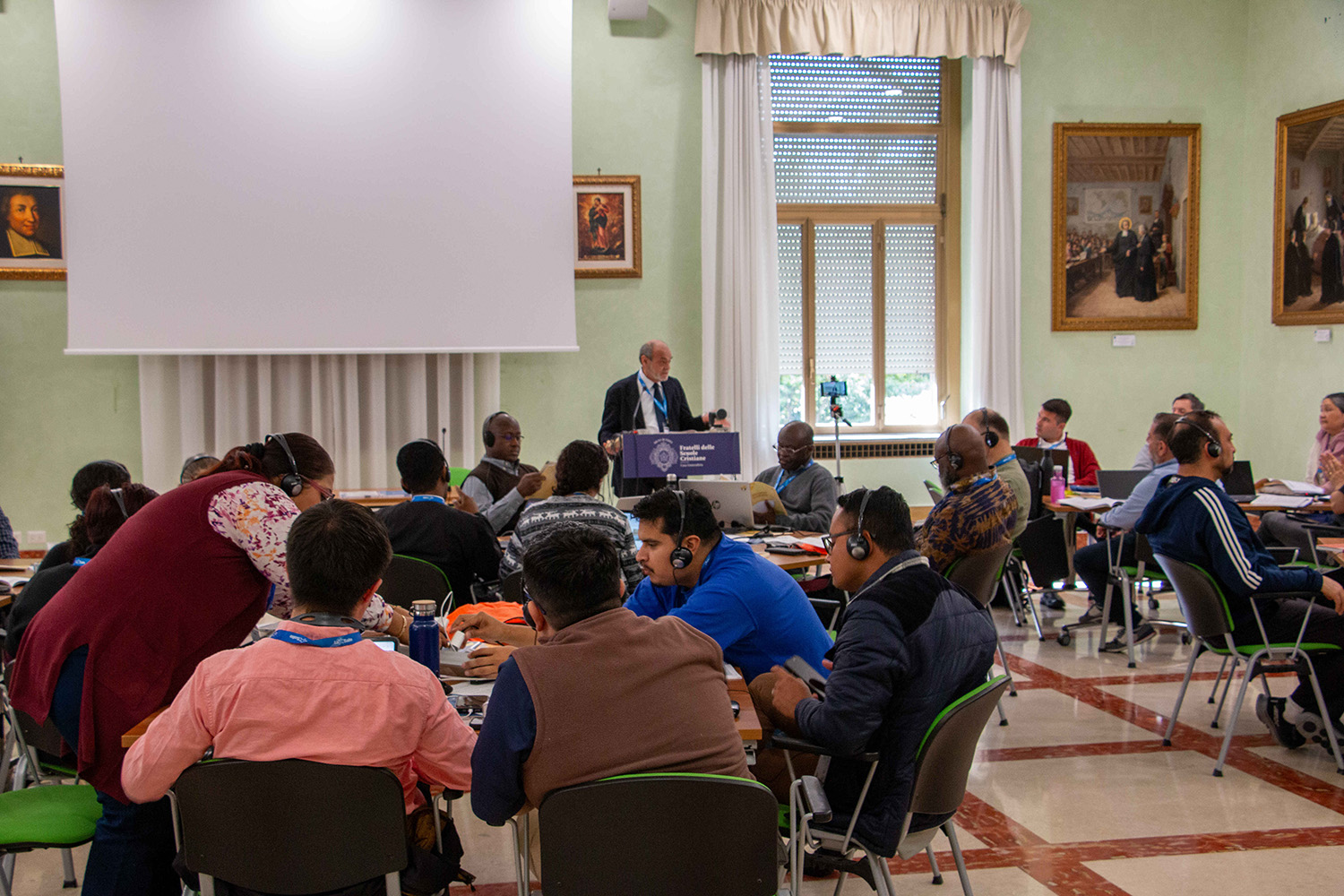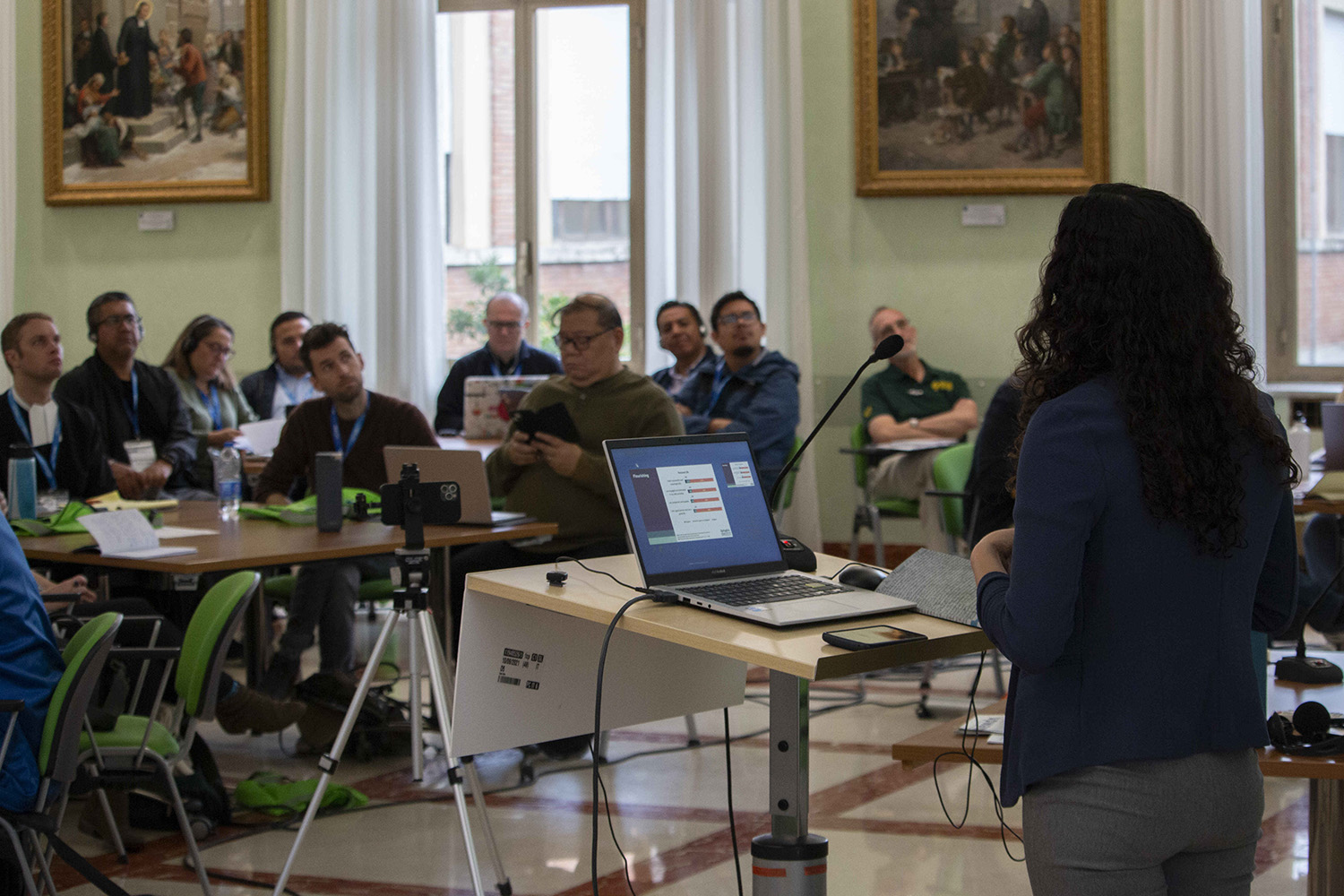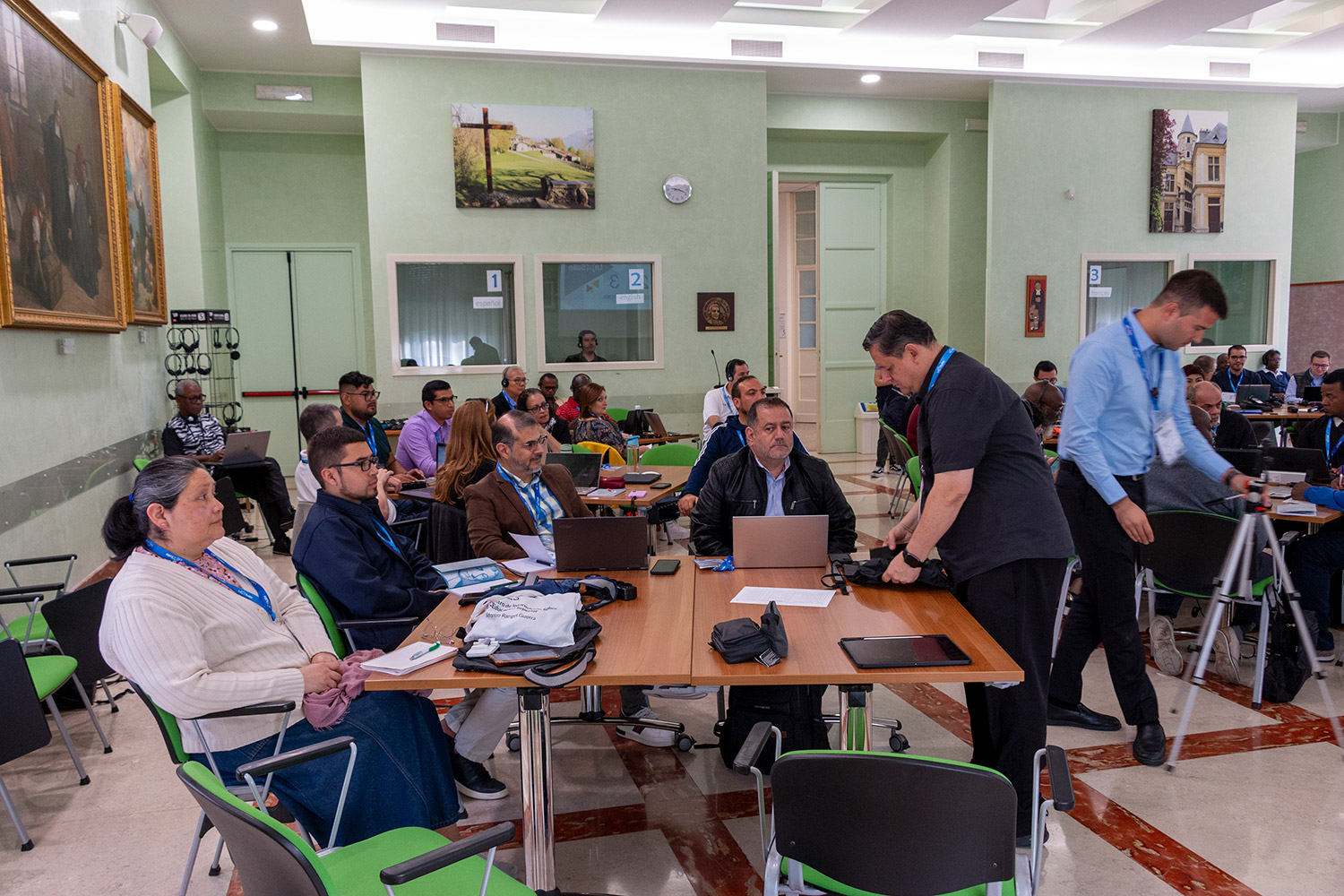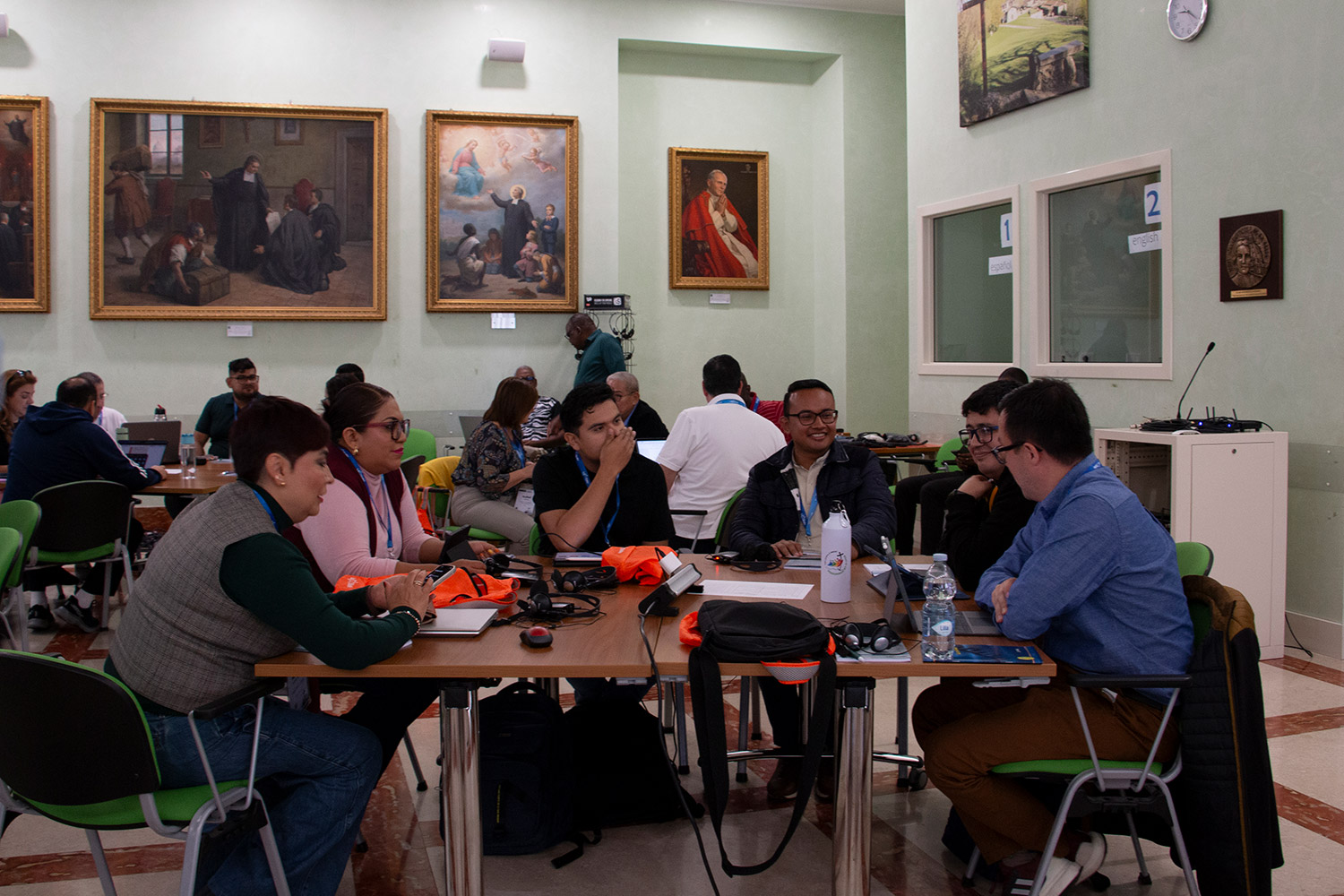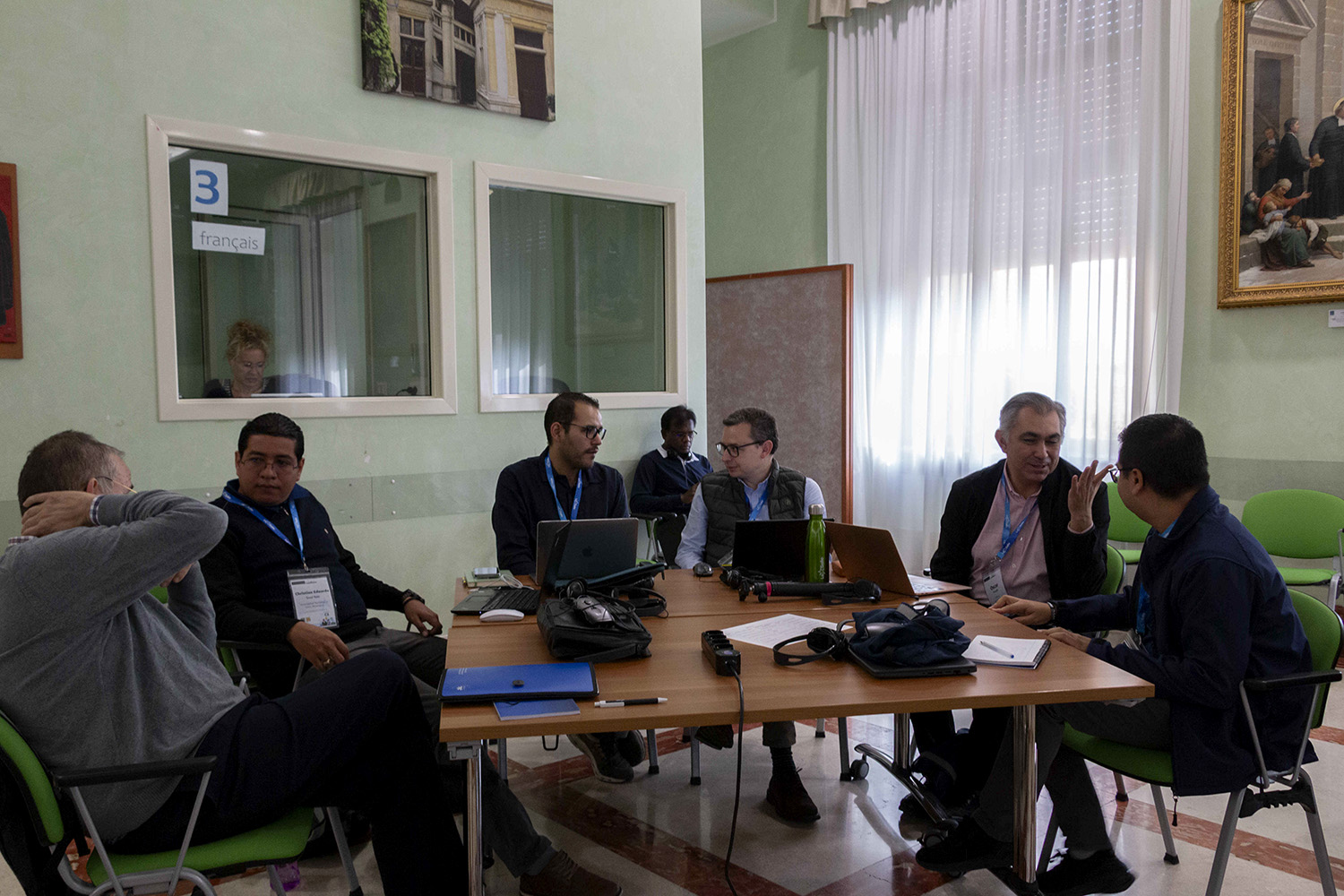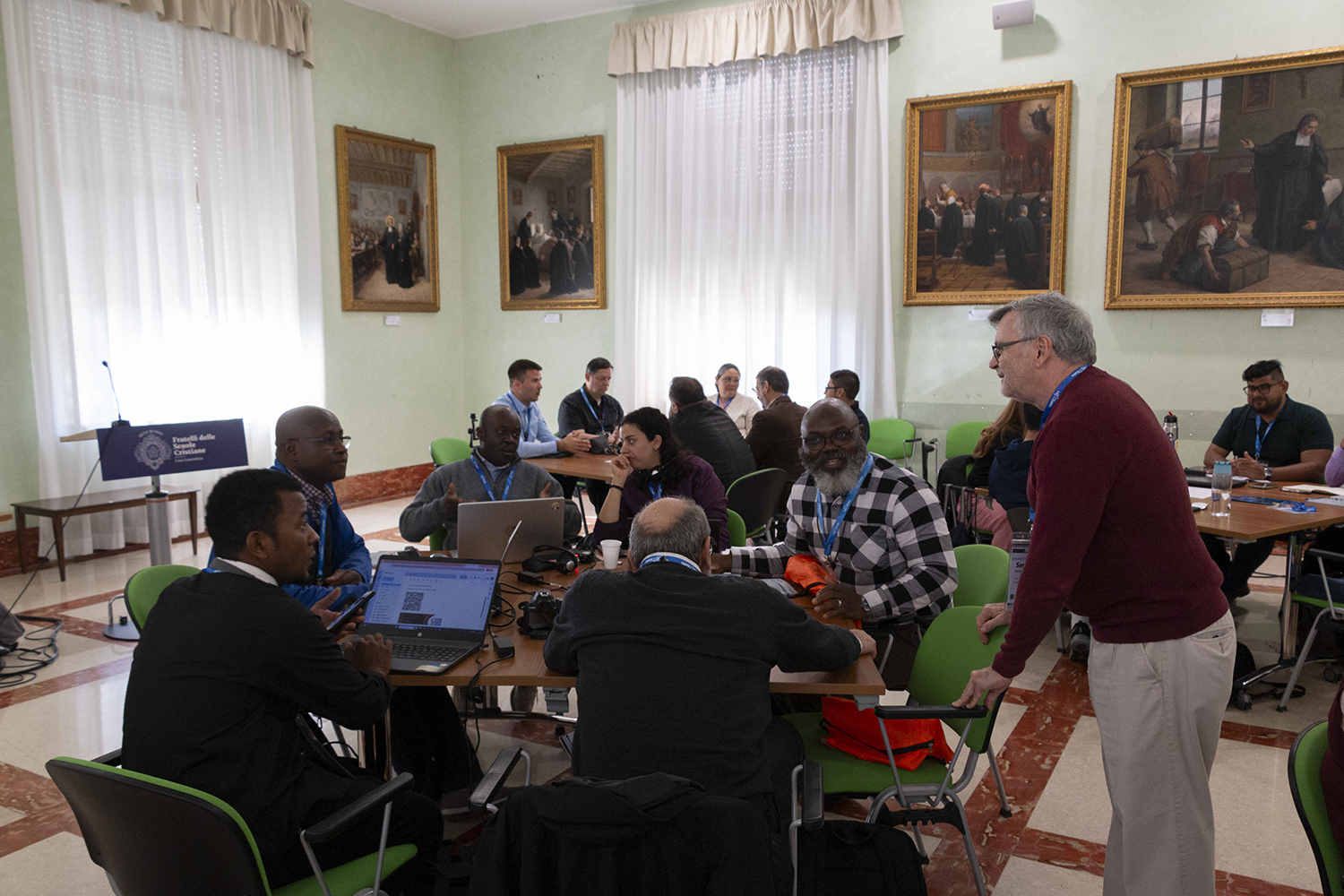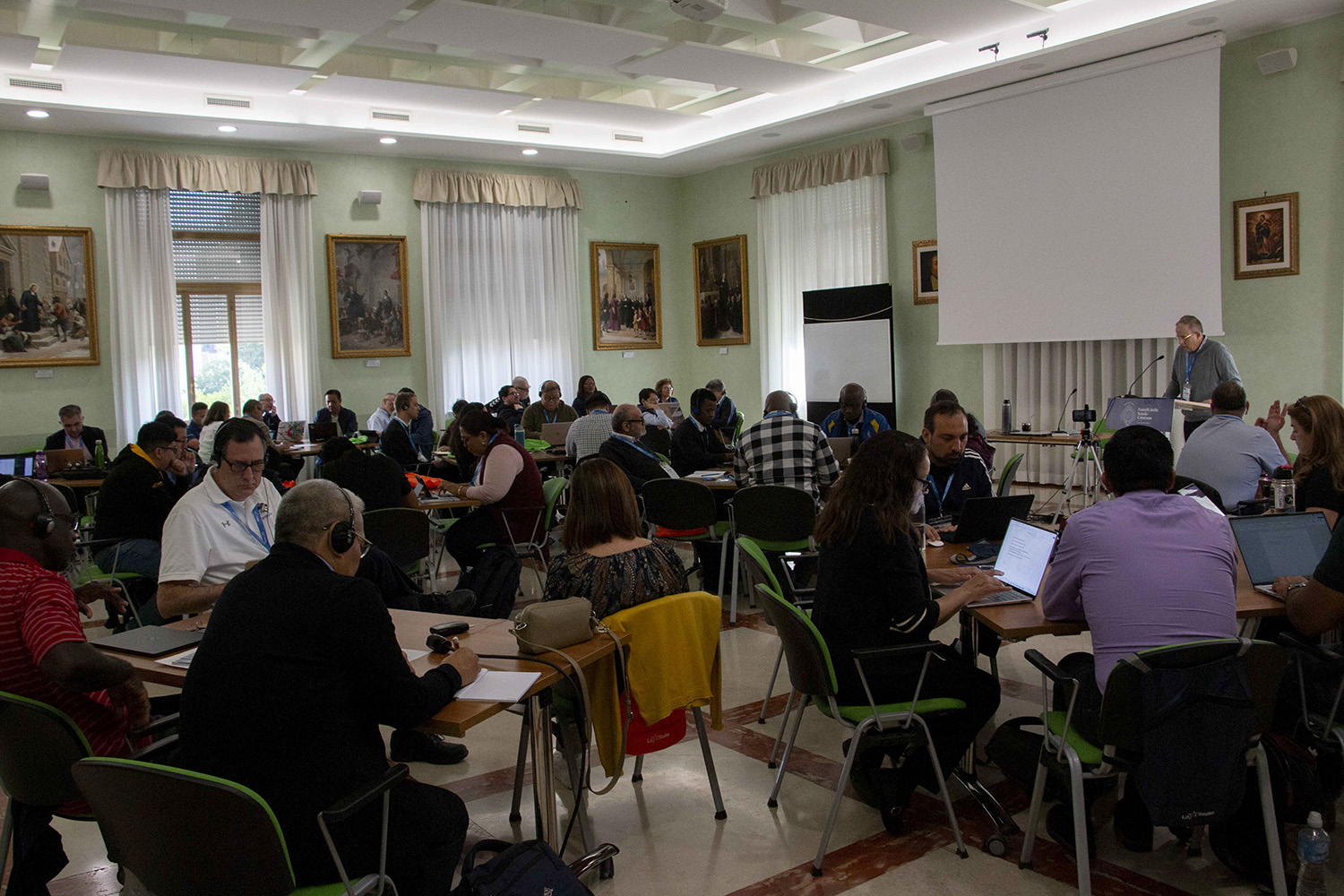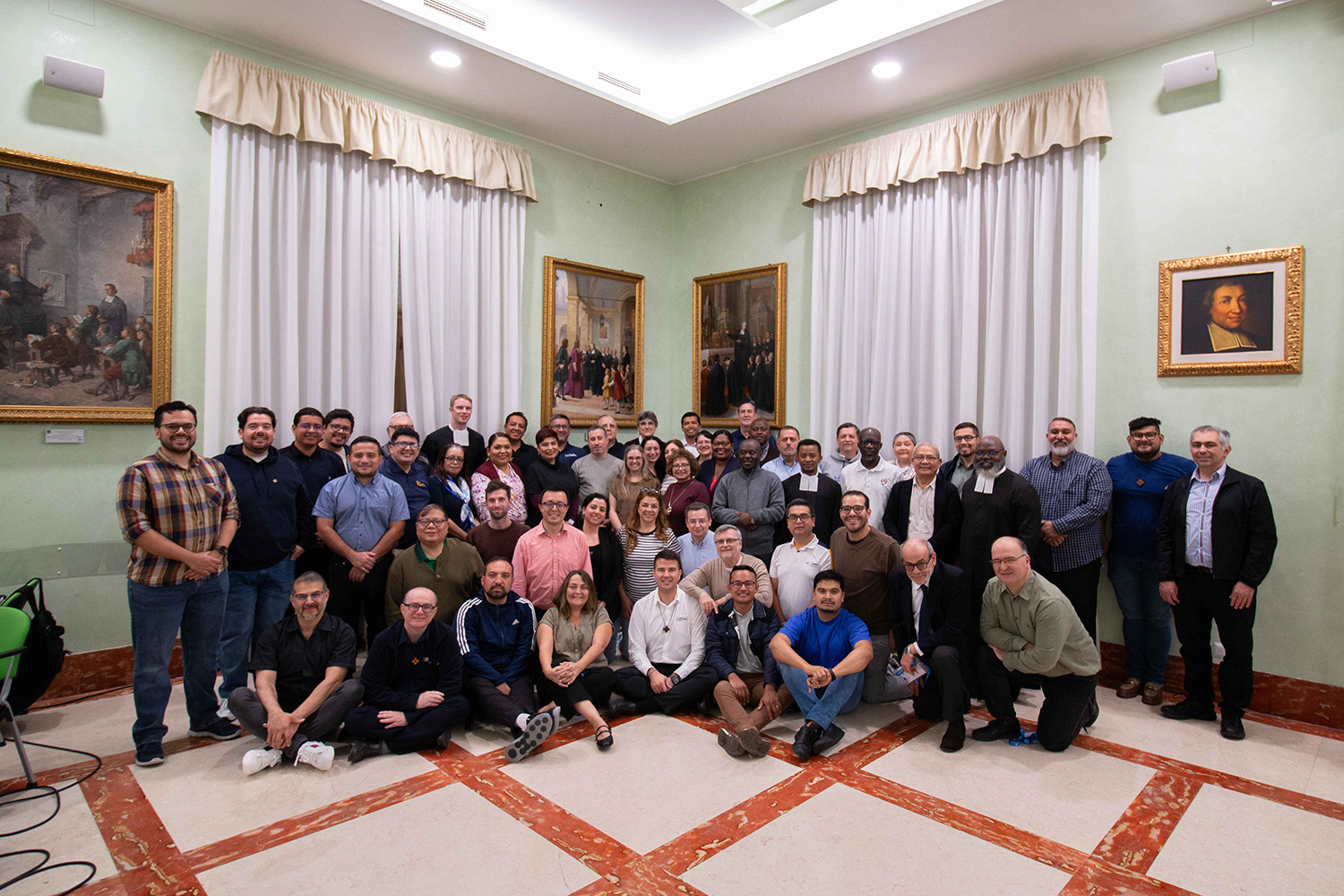
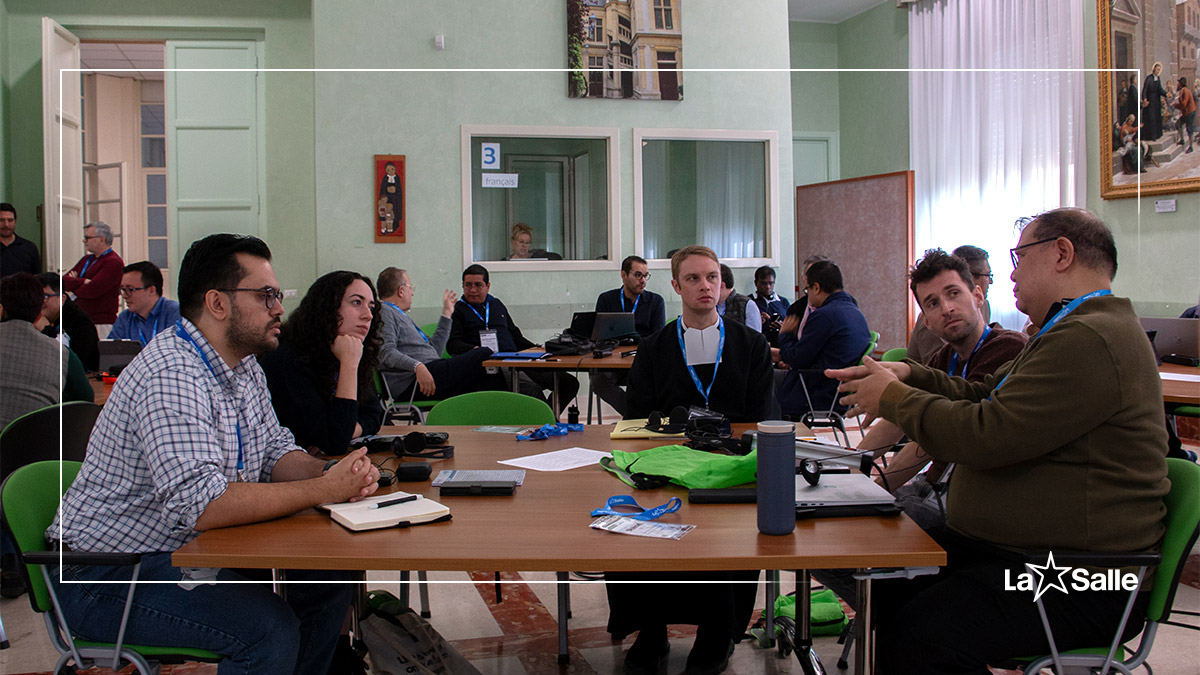


In the context of the Year of Catechesis, an initiative that seeks to renew the zeal for catechesis and evangelisation in the Institute of the Brothers of the Christian Schools, the Lasallian Research Seminar 2025 “has brought together people who are involved in various initiatives related to research and the training of catechists”, according to Brother Santiago Rodríguez Mancini, Director of the Office of Lasallian Heritage and Research.
Indeed, the Seminar, held from 20 to 24 October 2025, not only brought together experts and academic researchers, but also included the participation of Brothers and lay Lasallians who carry out catechetical and evangelisation initiatives in various countries and cultural and religious contexts – such as Pakistan, Spain, Argentina and the United States – while also facilitating the sharing of publications and journals on catechesis, such as Sinite, from the San Pío X Institute in Madrid; Segunda línea, from the Pastoral Institute for Adolescence in Buenos Aires; Sussidi per la catechesi, from the District of Italy; Mystagogia, from the Lasallian Institute for Evangelisation and Catechesis in Manila – including the Bible for Young People promoted by the Institute for Faith and Life in the United States.
“We did not want to have only experts, but rather a mix of experts, researchers, academics, and grassroots catechists from different Districts and schools”, adds Brother Santiago.
The Lasallian catechetical project
“One of the key elements that we must not lose, and which comes from our origins, is the importance of catechesis and religious education”, remarks Brother José María Pérez, from the Arlep District (La Salle in Spain and Portugal), who shared some reflections on the Lasallian catechetical project during the first day. “There have been moments of crisis, and looking to the future, we have to recover this formation”, adds Brother José María, who believes in the importance of “our educators and teachers being trained in Theology and Catechesis, so that they know how to announce the Word of God and the Gospel in a society that is very different from that of Saint John Baptist de La Salle, a more secularised society, and a multicultural and multi-religious society”.
These realities show that in modern times “there is a lot more diversity when it comes to how young people are approaching religion and approaching spirituality”, as Ms. Jaclyn Doherty of Springtide Research Institute has maintained, adding that it is important “to understand these different contexts in which young people and students are coming and when trying to teach them about religion, about God, about the Bible”.
New narratives and methodologies
In light of these emerging realities, it is also necessary to rethink the methodologies and narratives used to transmit the faith. In this regard, the last sessions of the seminar provided an introduction to Godly Play, a “method for enriching children’s spirituality (…) that emerged in the United States more than 45 years ago, created by Jerome Berryman, which brings the Word of God, the sacraments, and the history of the Church itself to children, by forming small communities called ‘circles’ with a narrator educator and another porter educator”, as detailed by Brother Jorge Sierra, from the Arlep District.
“This is a very interesting method which, together with other innovative methodologies, can help us to continue doing what we must continue to do: proclaim the Reign of God and his justice”, adds Brother Jorge.
Evaluation and commitments
Taking stock, Mr. Owen Schugusta, from the District of Eastern North America (DENA), values the opportunity to participate in the Seminar, as “just getting a broader perspective of the catechetical work that has been done throughout the Lasallian world has been extremely helpful”. He is also confident that the spirit of collaboration and exchange that was generated “will help us to refine our catechetical practices, and also to access and to implement the wealth of theological and pedagogical knowledge that already exists within our Lasallian Family”.
Ms. Rocío Silva, from Universidad La Salle in Mexico, agrees that, with the Seminar, “we have found common ground on shared concerns (…) for continuing to strengthen our commitment to catechesis and evangelisation”.
For his part, Brother Óscar Aguilar, from the Central America-Panama District, emphasises that the Seminar highlighted the need to “return to what St. Pius X told us: ‘apostles of the catechism’. I believe that we have forgotten our primary task, which is to be catechists. So, I am excited and challenged to take up again this task that is proper to us”.
“My hope is that the Commission on Evangelisation of which I am a part, can propose from these sessions ideas that will further and support the task of evangelization throughout the Institute”, says Brother Mike Valenzuela, convinced that “this opportunity to come together, to share the riches and the needs of the different sectors of the Institute is so important because we are One Lasallian Family, the ministry belongs to all of us”.
The great hope that emerges from the Lasallian Research Seminar 2025 is that it will be “a turning point for increasing our search and, above all, for working more closely together and inspiring one another”, as Brother Carlos Gómez, Vicar General of the Institute, said at the conclusion of the meeting.
Placing catechesis at the centre of the Institute’s reflection and mission was a decision of the 46th General Chapter and a dream of the Young Brothers: to renew catechesis, as Brother Carlos recalled. “Obviously, this is a task for years to come, but having held this seminar has allowed us to grow in the awareness that catechesis is an essential vocation in La Salle: to be witnesses of Jesus Christ in the world of education, in the world of young people, in the world of children”.