
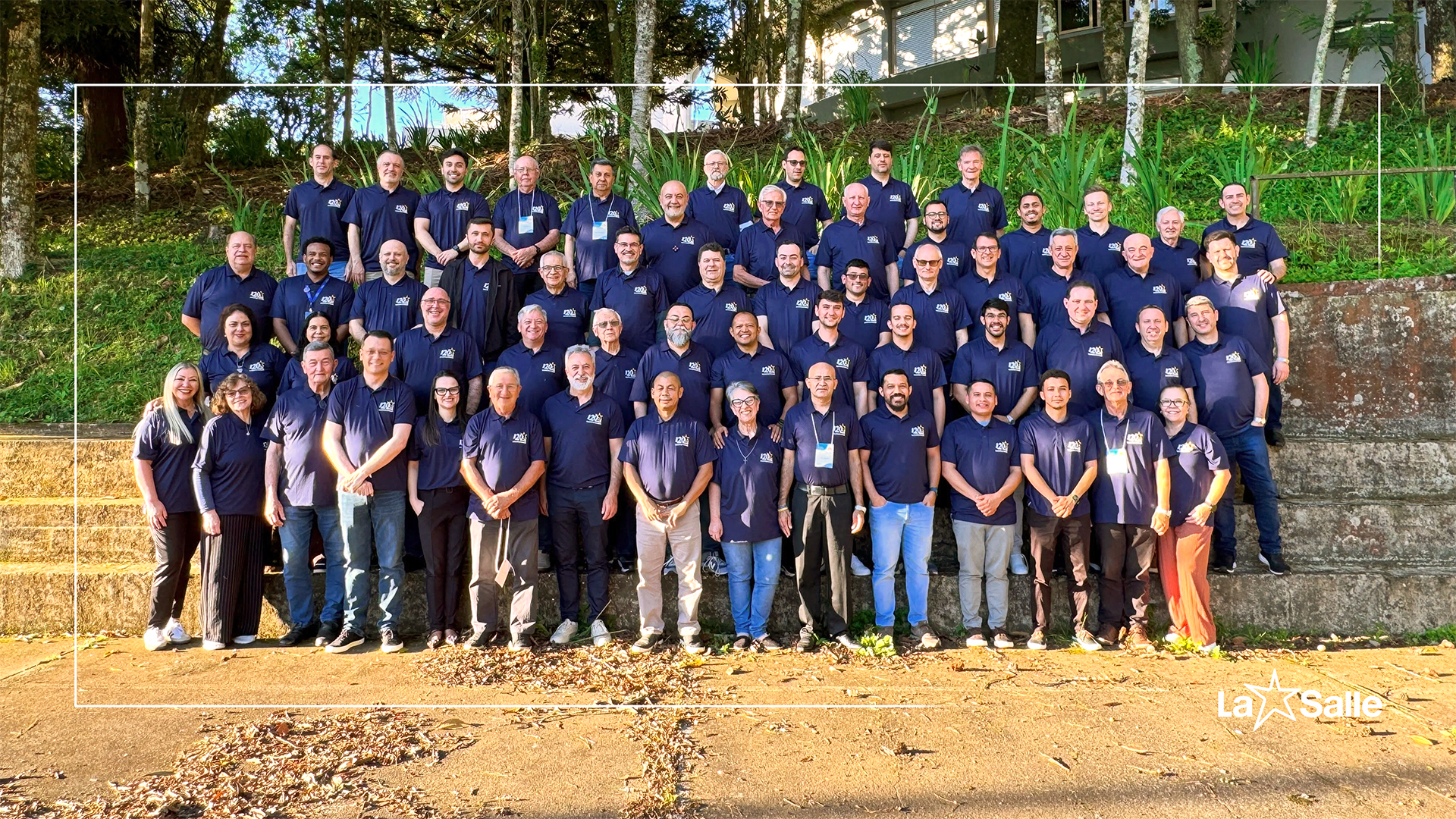


Between 10 and 14 November, the Brazil-Chile District held its Fourth District Chapter Assembly. The meeting, which took place at Recanto Medianeira in Veranópolis (in the state of Rio Grande do Sul), brought together more than 50 Brothers and Lasallian Partners to reflect on current challenges and jointly draw up the guidelines that will shape the Lasallian Mission and its actions for the period 2027–2030.
The District Chapter is a process of listening, evaluation, reflection and discernment that enables us to analyse our progress, recognise challenges and set priorities for the future. The Chapter Assembly marks the concluding stage of this journey, which began months earlier with various moments of preparation and participation by the Lasallian community.
Under the theme “Everything is connected: building synodal, fraternal communities committed to social justice”, the Assembly featured moments of spirituality, reflection and exchange. Throughout the meeting, participants assessed the progress and challenges of the four-year period now drawing to a close (2023–2026) and discussed topics such as strengthening fraternity, the formation of the Brothers, vocational ministry, sustainability and commitment to the educational mission.
For Brother Eduardo Ernesto Muñoz Tillmanns, the meeting was an opportunity to reflect collectively on the future of La Salle in Brazil. “In an atmosphere of fraternity and prayer, we have discussed the priorities, needs and realities that drive us to continue our work in the coming years,” he emphasised.
Based on the reflections and work carried out, proposals and lines of action were drawn up to guide the Brazil-Chile District over the next four years. For Hildegard Susana Jung, taking part in this process represents an opportunity to contribute directly to planning for the coming years. “It is a great honour and, at the same time, a great responsibility,” she emphasised.
Beyond marking the end of a period of reflection, the 4th District Chapter reaffirms La Salle Brazil-Chile’s commitment to building a mission that is increasingly fraternal, participatory and responsive to contemporary challenges. The reflections and decisions reached during the meeting will help to guide the next four years, strengthening the Lasallian identity and the commitment to education and social transformation.