

 “Nuestras raíces (our roots) is an initiative that originated as a proposal from the Instituto Fe y Vida, the De La Salle Brothers, and the Latin American and Caribbean Episcopal Council (CELAM), and has been taken up by the Pontifical Commission for Latin America (PCAL) with the support of the Dicastery for Culture and Education and the involvement of the Dicastery for Laity, Family and Life, amongst many other Church organisations”. This is how Dr Emilce Cuda, Secretary of the PCAL, explains it, emphasising that the Gathering “is aimed at young people, so that they may express themselves through forms of expression linked to art, culture and aesthetics, to ‘disarm the words’, as Pope Leo XIV asks us to do, and so that they may say how we can change the world, based on their dreams and needs, to make it a fairer, more fraternal and hopeful place”.
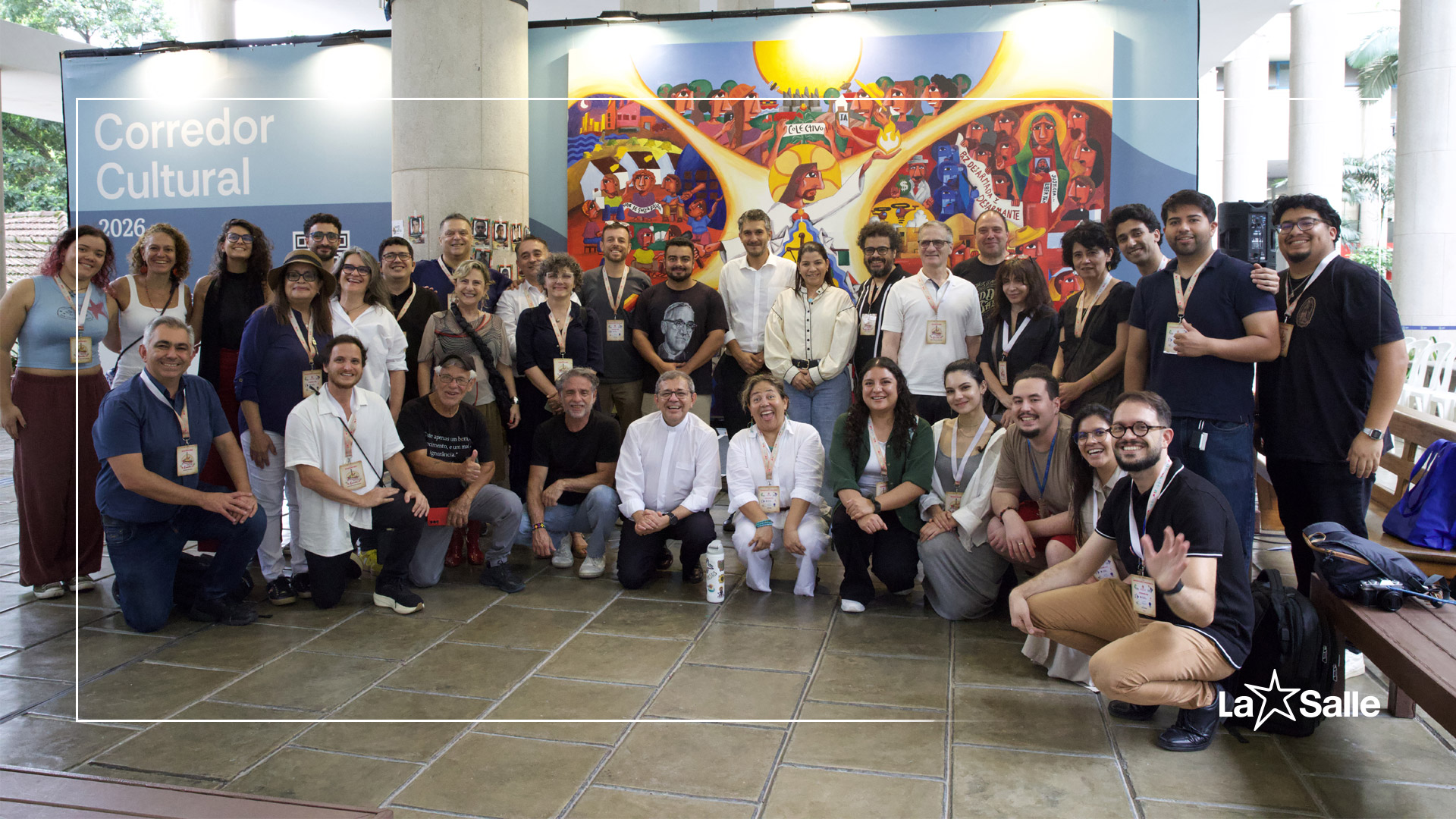
Thus, the Pontifical Catholic University of Rio de Janeiro, in Brazil, hosted the first in a series of meetings from 3 to 6 November, bringing together dozens of young people from Latin America and the Caribbean to share their stories and memories of hope through cultural and artistic expressions inspired by the Church’s Social Doctrine.
Art to connect hearts
 “Art amongst young people has served as a bridge to connect their hearts and dreams with those of other young people and, above all, with the Church,” says Juan Escafuller, Executive Director of the Instituto Fe y Vida. In this regard, “at the Instituto Fe y Vida, a Lasallian ministry, we want to invite young people to discover their talents and creatively express who they are and what their roots are, drawing on their own stories,” adds Elisabeth Román, Director of Communications and Outreach at the Instituto Fe y Vida.
In the case of young people who are the children of Hispanic migrants, “whenever we ask them where they come from, they tell us about their origins, their families and their cultural roots, even if they were born in the United States,” says the Executive Director of the Instituto Fe y Vida. That is why “this project aims to reach out to the margins and respond to the cries of young people who feel abandoned and isolated – those to whom we want to give a voice through art and culture”.
“No one is saved alone”
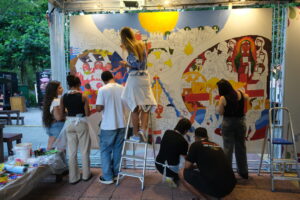
The Rio Gathering featured artistic spaces for collective creation and cultural exhibitions under the motto “no one is saved alone”, evoking the legacy of Pope Francis in his encyclical letter *Fratelli Tutti*. Furthermore, throughout the event, three round-table discussions on interdisciplinary dialogue were held, inspired by the teachings of Pope Leo XIV: ‘human beings and technology’, ‘limits and fragility’, and ‘power and data’.
Through this “cultural corridor”, the aim is to recognise art not only as a form of expression, but also as a practice that enables us to share experiences, bring realities to light and explore collective responses to life’s challenges, whilst the Church’s Social Doctrine provides a framework for addressing these issues from a perspective centred on the person and on the communal dimension of life.
“Our roots give us our identity”
“Roots give us our identity: they remind us of where we come from, the history we have inherited, the people who came before us and the values that have been passed down to us”, said the Brazilian Gleison de Paula Souza, Secretary of the Dicastery for the Laity, Family and Life, during the opening ceremony, emphasising that “roots exist so that the tree can grow — not to remain anchored to the past —, and perhaps this is precisely one of the great tasks facing the youth of Latin America and the Caribbean: to gain a deep understanding of their roots so that they may build, with freedom and creativity, a new future”.
Hence the importance of art — continued the Brazilian layman — for “art has the capacity to reach dimensions of the person that we often cannot reach through concepts or discourse alone. A song, a painting, a dance, a photograph, a film or a literary work can express the pain of a people, the beauty of a culture, the memory of a community and also the hope for a different world”.
Evangelising through art
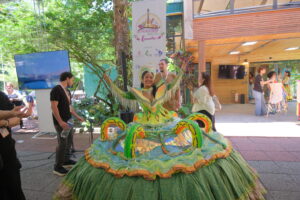 For Elisabeth Román, “our roots are linked to our stories, and when we accompany young people in Hispanic pastoral care in the United States, we realise that the culture they bring with them is that of their parents and of their peoples in Latin America and the Caribbean. That is why this project draws on art and culture as a way of raising their voices and as an opportunity for evangelisation by and for young people”.
“We have a responsibility to carry this call to reclaim our stories as migrants, in a synodal manner, in spaces for listening and dialogue such as these, where art connects us with our roots,” says Juan Soto, President of the National Catholic Council for Hispanic Ministry (NCCHM), which is one of the organisations supporting this initiative, alongside the Organisation of Catholic Universities of Latin America and the Caribbean (ODUCAL), the University Network for the Care of Our Common Home (RUC) and the Office of Lasallian Global Communication.
Following this first edition in Rio de Janeiro, ‘Nuestras Raíces’ will continue to create spaces for dialogue between artistic creation, academic thought and social commitment, through an open call for participation in the meetings to be held in Bogotá (Colombia), Mexico City (Mexico) and Santo Domingo (Dominican Republic). From 2027 onwards, meetings will also be held in various regions of the United States, in San Diego, Miami, New York and Chicago.