


 In many cities across India, the digital transformation is gathering pace. The internet, technological tools and new skills are changing the way people live, work and learn. But this is not the case everywhere.
In rural areas of southern India, for thousands of children and young people, all this remains a distant prospect. In many villages, technology is not part of daily life and often not even part of school life. And this means one very simple thing: starting out at a disadvantage.
Because today, not knowing how to use digital tools is not just an academic challenge. It is a barrier that can close doors, take away opportunities and limit one’s future.
It is precisely this realisation that has given rise to the Smart Classrooms project, promoted by the Brothers of the Christian Schools, who have been working alongside the most vulnerable communities in rural areas of southern India for many years.
 The aim is clear: to bring technology to places where it is not yet available.
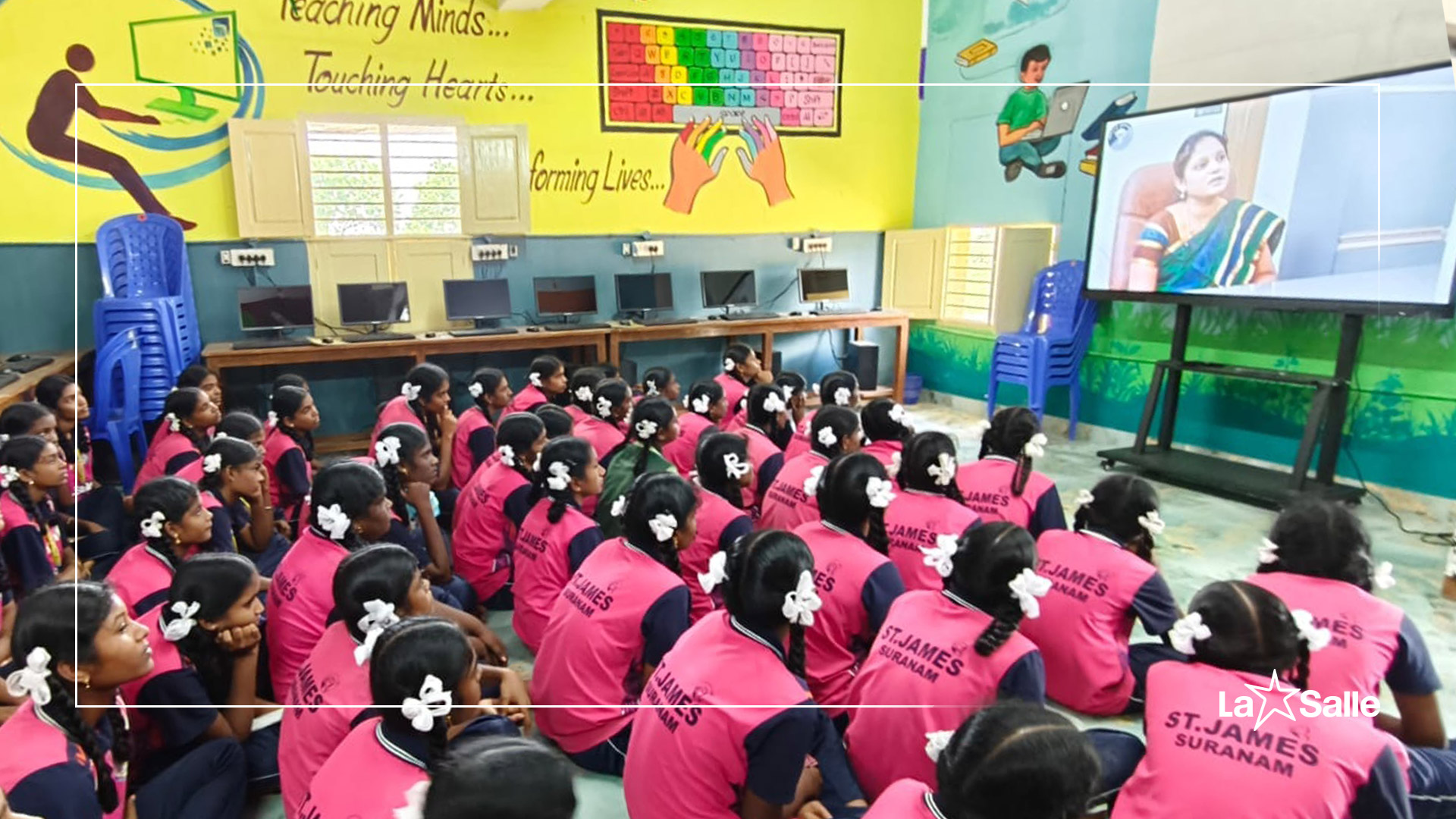
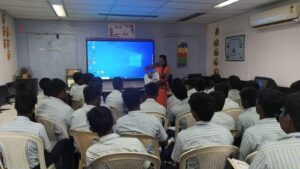
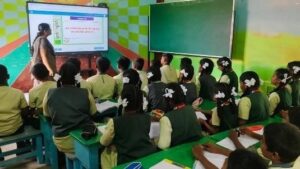
Eight La Salle schools in the states of Assam, Andhra Pradesh and Tamil Nadu have been equipped with digital learning infrastructure: LED screens, computer workstations and essential technological tools for day-to-day teaching.
This tangible change has transformed the way teaching and learning take place.
Each school has been able to create ‘smart classrooms’ – spaces where lessons are no longer limited to words written on the blackboard, but include images, videos, simulations and interactive activities. And the results are clear to see.
Secondary school students have seen an improvement of up to 7 per cent in their test results. But it is not just a question of marks. Teachers report livelier classes, more curious students and greater participation. Difficult concepts become easier to understand when they can be seen, heard and experienced.
“Since we introduced these tools, the way we teach has really changed”, says a teacher at La Salle St Joseph’s School in Keelamudiman. “Interactive whiteboards allow us to engage pupils much more and to adapt lessons to different learning styles”.
For teachers, too, the change is significant: the time spent on repetitive tasks has been reduced by between 25 and 50 per cent, leaving more room for educational interaction.
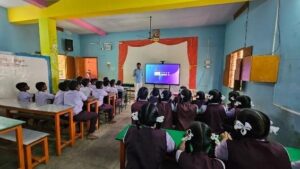 But the impact extends beyond the school. Today, the project reaches 2,535 students, who have regular access to digital tools during school hours, and 274 teachers and adults, who use the classrooms for vocational training and community courses in the afternoons.
The Smart Classrooms are, in fact, also designed as spaces open to the community: places where other organisations can run programmes on health, social justice and civic awareness.
In this way, the school becomes much more than a place of learning. It becomes a centre for growth for everyone.
And perhaps this is precisely the heart of the project: not just teaching how to use a computer, but giving these young people something even more important: the chance to no longer feel isolated; to be connected to the world; to imagine a future beyond their own village. Because today, digital literacy is not a luxury. It is a key. And for thousands of young people in India, that key has only just begun to open new doors.
* Author: Laura Ballerini – La Salle Foundation. Published in: Rivista Lasalliani, Year XXIII – No. 90, pp. 10-11.