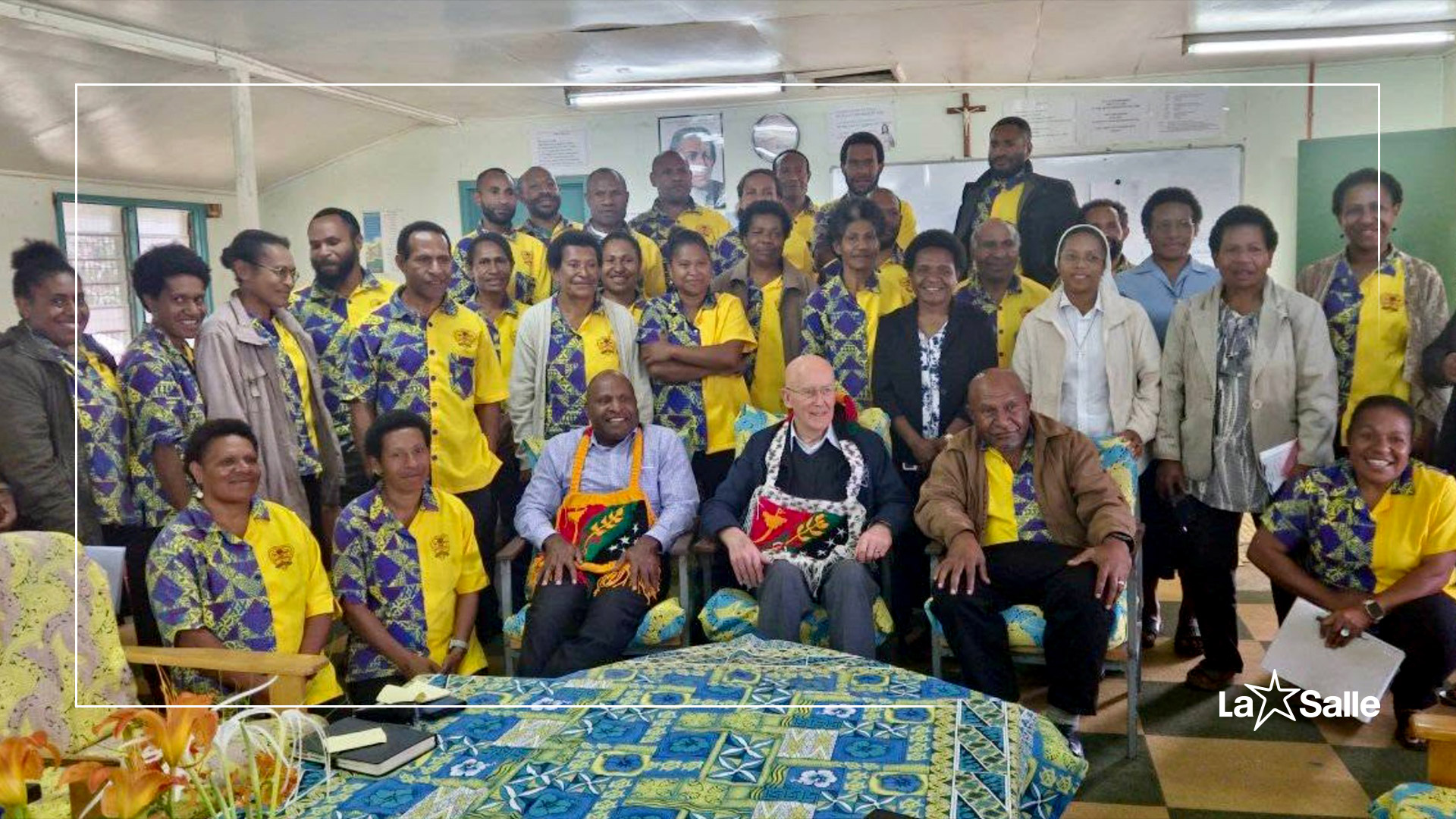


For the Lasallian community in Papua New Guinea (PNG), the 80th anniversary of the arrival of the first Brothers in the country is not merely a historical milestone to be commemorated, but a testimony to a living legacy. The recent celebration in Port Moresby brought together different generations around a single core: an educational mission that looks to the future and offers inspiration for the entire global Lasallian network.
The Roots: Four Pioneers and a Shared DNA
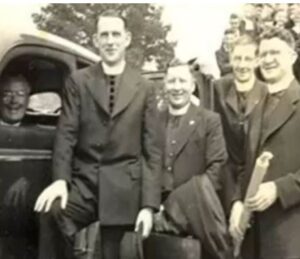 It all began in January 1946, when four Australian missionary Brothers – Patrick Howard, Anthony Broderick, Lucian Thorpe and Celsus Maguire – arrived in Port Moresby to establish the first Lasallian class, starting with just 80 young people.
From that small seed, a vast network has sprung up. Today, the principles brought by those first Brothers have become part of the local people’s DNA. In Lasallian schools across PNG, there is a deep sense of human connection: pupils are taught that their classmates are brothers and sisters walking the same path, deserving of compassion, a listening ear and care.
To date, the key factors behind Lasallian success in Papua New Guinea are:
- A focus on the least among us: the Brothers and their collaborators have centred their mission on reaching ‘the last, the lost and the least’, bringing education even to the most isolated rural communities.
- Nation-Building: even before the country gained independence, Lasallian schools were already helping to shape the future ruling class; indeed, today Lasallian alumni hold key roles in government ministries, on boards of directors, in hospitals and in the technology sector, bringing the values of leadership and service learnt at school into the world of work.
- “Together and in Association”: The union between the historic institutions and the new associated schools (such as the Lahara Birdwing School) demonstrates the strength of a model based on solidarity and mutual care. First-hand accounts confirm this: Alice Kalawan, now deputy headteacher, recalls with excitement how, twenty years ago, as a pupil who had just arrived at the boarding school, she had lost her dinner plate; a Brother noticed this and the following day turned up in the canteen with a new plate for her. This care for the individual is also reflected in the students: the Lasallian community in PNG is renowned for the spirit of solidarity shown by its young people and alumni, who are always ready to support and be close to one another and to rally round the families of their classmates in times of mourning (the traditional haus krai).
Laypeople taking the lead and the Brothers as a source of inspiration
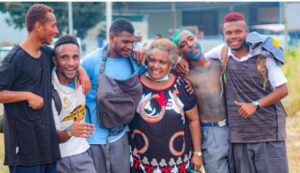 Today, the number of Brothers in Papua New Guinea is smaller than in the past, but their impact has never been greater.
Rather than directly managing every single class, the Brothers who remain in the country focus more on youth ministry, senior management and, above all, on acting as mentors to the headteachers and lay teachers who now lead the schools.
As Annette Ingirim, headteacher of De La Salle Secondary School (the first school founded in the country), emphasised: “The Brothers have succeeded in ‘handing over the helm’, instilling their mission in the hearts of local lay educators. There may be few Brothers today, but the Lasallian heartbeat in Papua New Guinea has never been stronger”.
The history of Papua New Guinea demonstrates how the Lasallian charism is a living force, capable of adapting to the times and transforming society. From the courage of the first four Australian pioneers to the commitment of thousands of lay people today, these eighty years of mission are a testament to an education that liberates, unites and builds the future. An extraordinary achievement that inspires the entire international Lasallian community to look ahead with renewed hope.